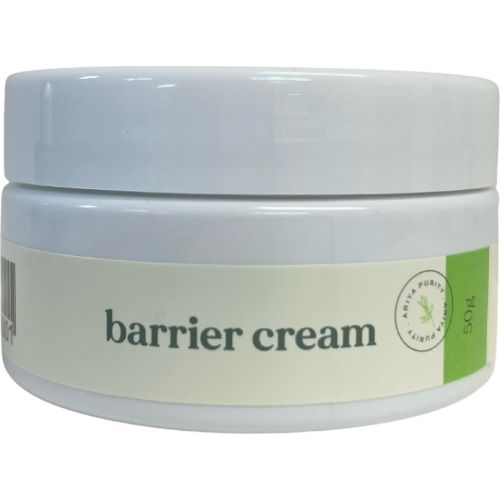
BARRIER CREAM 50g
RRP $20.65 Inc GST
BARRIER CREAM 50g
• Creates a physical zinc oxide barrier that keeps irritants off the skin and holds in moisture while the skin settles
• The beeswax and hydrogenated vegetable oil structure resists body heat and moisture, so the layer is still in place in the early morning
• Female threadworms migrate out of the anus at night to lay eggs on the surrounding skin, causing the itch. A thick barrier layer makes that skin a poor site for egg-laying and traps eggs in the cream for removal at the morning wash
• Soothes the itch, so there is less scratching and less hand-to-mouth reinfection
- Caprylic/Capric Triglyceride – light, non-greasy emollient carrier that disperses the zinc oxide and helps the cream spread evenly
- Zinc Oxide – inert mineral that forms the protective layer; shields skin from moisture, stool, friction and irritants, and is mildly astringent and soothing
- Shea Butter – softens and conditions the skin and adds to the occlusive film that reduces moisture loss
- Beeswax – forms a water-resistant film and gives the cream body, so it stays where it is applied
- Hydrogenated Vegetable Oil – firms the base so the layer holds overnight and does not melt off at body temperature
- Fragrance free. Not vegan (contains beeswax). The current 50 g formula replaces the earlier 60 g version (zinc oxide, beeswax, shea butter).
• Threadworm: apply liberally around the anus at bedtime. In girls it may also be applied to the skin outside the vagina. Leave as a visible layer; the cream should not be rubbed in.
• Morning: wash the area with warm water to remove the cream and any eggs before dressing.
• General skin protection: apply a thick layer to clean, dry skin as needed, for example at each nappy change.
• Use a clean finger or spatula and wash hands after applying.
Cautions
• External use only. Do not apply inside the vagina or anus.
• If irritation occurs, discontinue use. Avoid with known sensitivity to beeswax or bee products.
• Do not use on deep, infected or weeping skin without assessment. If thrush is suspected, treat it and apply the barrier cream over the top.
• Refer to a GP if there is bleeding, fever, a spreading rash, or symptoms that persist despite treatment.
• Zinc oxide can mark fabrics; use older underwear or pyjamas overnight.
Storage
Store below 30 °C, away from direct sunlight, with the lid tightly closed. The cream softens in heat and firms again once cool; this does not affect it. Keep out of reach of children.