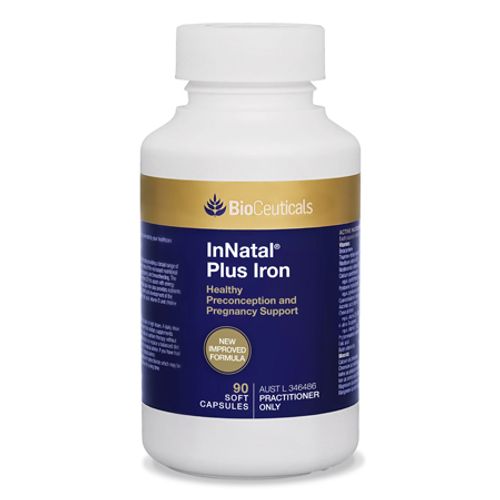
INNATAL PLUS IRON 90Scaps
RRP $48.95 Inc GST
INNATAL PLUS IRON 90Scaps
InNatal Plus Iron provides nutrients specifically formulated to support women's preconception health, healthy pregnancy, and healthy foetal development. InNatal Plus Iron maintains zinc and vitamin D levels in breastfeeding women. Choline supports healthy foetal brain development when dietary intake is inadequate.
- Betacarotene 3mg
- Thiamine nitrate 864 micrograms
- Riboflavin sodium phosphate (active vitamin B2) 889 micrograms (equiv. riboflavin (vitamin B2) 700 micrograms)
- Nicotinamide (vitamin B3) 9 mg
- Nicotinic acid (vitamin B3) 5mg
- Calcium pantothenate 2.73 mg (equiv. pantothenic acid (vitamin B5) 2.5 mg)
- Pyridoxal-5-phosphate (P5P) (active vitamin B6) 15.7 mg (equiv. pyridoxine (vitamin B6) 10mg)
- Pyridoxine hydrochloride 18mg (equiv. pyridoxine (vitamin B6) 15mg)
- Calcium folinate 191 micrograms (equiv. folinic acid (activated vitamin B9) 150 micrograms)
- Levomefolate calcium (calcium L-5-methyltetrahydrofolate) 108 mcg (equiv. levomefolic acid (5-MTHF) (active vitamin B9) 100 micrograms)
- Mecobalamin (co-methylcobalamin) (active vitamin B12) 1.3 micrograms
- Ascorbic acid (vitamin C) 50 mg
- Colecalciferol 12.5 micrograms (equiv. vitamin D3 500IU)
- d-alpha Tocopherol acid succinate 16.5 mg (equiv. vitamin E 22.4IU)
- Biotin 15 micrograms
- Menaquinone 7 (vitamin K2) 30 micrograms
- Iron (II) glycinate (bisglycinate) 7.5mg
- Calcium (as phosphate) 25 mg
- Chromium (as nicotinate) 15 micrograms
- Iodine (as potassium iodide) 135 micrograms
- Magnesium (as phosphate pentahydrate) 15 mg
- Manganese (as amino acid chelate) 1mg
- Molybdenum (as molybdenum trioxide) 25 micrograms
- Selenium (as selenomethionine) 17.5 micrograms
- Zinc (as amino acid chelate) 10 mg
- Choline bitartrate 100 mg
- Inositol (myo-inositol) 30 mg
Adults: Take 1 capsule two times a day, or as professionally prescribed. Take with food.
This medicine contains selenium which is toxic in high doses. A daily dose of 150 micrograms for adults of selenium from dietary supplements should not be exceeded. Advise your doctor of any medicine you take during pregnancy, particularly in your first trimester. Contains soya bean products and sulfites.
Iron supplements should not be used in haemochromatosis, haemosiderosis or iron-loading anaemias (thalassaemia, sideroblastic anaemia).
People with high cholesterol or high blood pressure should talk to their doctors before taking vitamin B3; it may interact with their medications.
People with blood disorders should talk to their doctors before taking vitamin B3.
People with anxiety or narcolepsy should talk to their doctors before taking vitamin B6; it may interact with their medications.
Concurrent use of anti-seizure medications with vitamin B6 should be monitored.
Vitamin B6 is commonly used to reduce symptoms of morning sickness, but may interact with other anti-nausea medicines for pregnancy.
Vitamin B12 may reduce tetracycline hydrochloride (antibiotic) bioavailability; separate doses by at least two hours.
People taking blood thinners should talk to their doctors before taking vitamin K. It may interfere with the medicine.
Concomitant use of aminoglycoside antibiotics and magnesium can increase the risk for neuromuscular weakness.
Concurrent administration of levothyroxine and calcium may reduce drug absorption; separate doses by at least 4 hours.
Concurrent administration of quinolone antibiotics and calcium may reduce drug efficacy; take quinolones either 2 hours before or 4-6 hours after calcium.
Concurrent administration of tetracycline antibiotics and calcium may reduce drug efficacy; separate doses by at least 2 hours.
Vitamin C increases the amount of aluminium absorbed from aluminium-based antacids; separate doses by at least 2 hours.
Vitamin C supplementation should be used with caution by people with erythrocyte glucose-6-phosphate dehydrogenase deficiency, haemochromatosis, thalassaemia major or sideroblastic anaemia, due to possible exacerbation of iron toxicity from increased mobilisation of iron reserves.
People with hypercalcaemia should not take vitamin D; it will worsen symptoms.
People with diabetes should talk to their doctors before taking selenium; it may worsen symptoms.
High-dose zinc supplementation may cause gastrointestinal distress.
Zinc interacts with non-steroidal anti-inflammatory drugs; separate doses by 2 hours.
Iron supplements should not be used in haemochromatosis, haemosiderosis or iron-loading anaemias (thalassaemia, sideroblastic anaemia).
People with high cholesterol or high blood pressure should talk to their doctors before taking vitamin B3; it may interact with their medications.
People with blood disorders should talk to their doctors before taking vitamin B3.
People with anxiety or narcolepsy should talk to their doctors before taking vitamin B6; it may interact with their medications.
Concurrent use of anti-seizure medications with vitamin B6 should be monitored.
Vitamin B6 is commonly used to reduce symptoms of morning sickness, but may interact with other anti-nausea medicines for pregnancy.
Vitamin B12 may reduce tetracycline hydrochloride (antibiotic) bioavailability; separate doses by at least two hours.
People taking blood thinners should talk to their doctors before taking vitamin K. It may interfere with the medicine.
Concomitant use of aminoglycoside antibiotics and magnesium can increase the risk for neuromuscular weakness.
Concurrent administration of levothyroxine and calcium may reduce drug absorption; separate doses by at least 4 hours.
Concurrent administration of quinolone antibiotics and calcium may reduce drug efficacy; take quinolones either 2 hours before or 4-6 hours after calcium.
Concurrent administration of tetracycline antibiotics and calcium may reduce drug efficacy; separate doses by at least 2 hours.
Vitamin C increases the amount of aluminium absorbed from aluminium-based antacids; separate doses by at least 2 hours.
Vitamin C supplementation should be used with caution by people with erythrocyte glucose-6-phosphate dehydrogenase deficiency, haemochromatosis, thalassaemia major or sideroblastic anaemia, due to possible exacerbation of iron toxicity from increased mobilisation of iron reserves.
People with hypercalcaemia should not take vitamin D; it will worsen symptoms.
People with diabetes should talk to their doctors before taking selenium; it may worsen symptoms.
High-dose zinc supplementation may cause gastrointestinal distress.
Zinc interacts with non-steroidal anti-inflammatory drugs; separate doses by 2 hours.

